


Did you know? 90% of fire alarm calls responded by Edmonton Fire Rescue Services are classified as unwanted.
An unwanted alarm is any activation of a Fire Alarm System that results in a fire rescue services response when there is no actual danger to the safety, health and welfare of people, property or the environment. Unwanted calls redirect emergency services away from actual emergencies.
Types of Unwanted Alarms
There are four types of unwanted alarms as defined by the National Fire Protection Association (NFPA):
- Malicious: Alarms caused as a prank or deliberate false pull station activation
- Nuisance: Alarms caused by something other than a fire, such as cooking smoke, dust, steam or airborne contaminants
- Unintentional: Alarms caused by accident, such as triggering a detector while moving furniture or an accidental false pull
- Unknown: Alarms with no identifiable cause, where an investigation fails to find why the system was activated
The City encourages Edmontonians to take an active role in preventing these alarm calls.
Common Causes for Unwanted Alarms and How to Prevent Them
Never leave the kitchen when using the stovetop. If you must leave, even briefly, turn off the stove. Property managers should regularly review cooking equipment policies with tenants.
Smoke outdoors whenever possible. Use deep, sturdy ashtrays to dispose of smoking materials and ensure they are wet before placing them in the trash. Ensure clear "No Smoking" signage in common areas. Never extinguish smoking materials in planters.
Ensure smoke detectors are installed away from bathrooms or other sources of high steam.
Consider the type and sensitivity of the detectors in areas that can be set off by dust or pollen. Ensure your fire detection systems are clean and properly maintained.
Let contractors know about fire safety arrangements, location of fire detection systems, and the emergency plan for their working location. Use "hot work" permits and temporarily cover detectors or isolate zones during construction (ensure covers are removed immediately after work).
Manage alarms set off by outages by coordinating with your alarm management company. If there is no emergency, ensure EFRS is not notified.
Managing Pull Station Activations
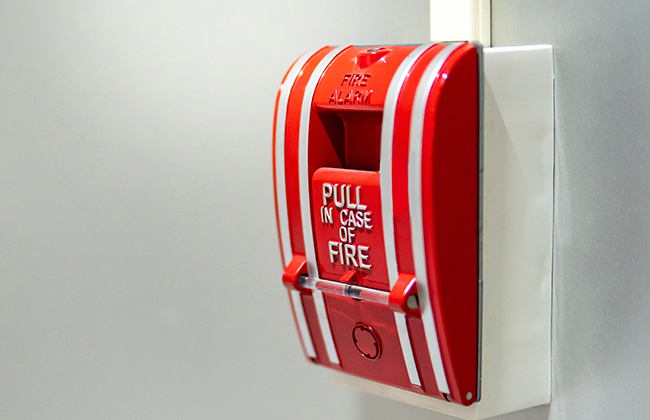
Alarm pull stations are a frequent source of accidental or malicious alarms. If your building is experiencing frequent issues, consider the following upgrades:
- Protective Hardware: Install clear, alarmed covers such as piezo covers over pull stations to discourage tampering.
- Hardware Upgrades: Where possible, replace single-action stations (pull-down only) with dual-action stations (push-in and pull-down) to prevent accidental activation.
- Monitoring & Signage: Install video monitoring at exit points and clear signage such as "Smile, you're on camera" to discourage misuse.
- Removal: Evaluate if manual pull stations can be safely removed or relocated in specific areas where they are frequently abused.
Resetting Alarm Systems
Alarm resets are the responsibility of property owners or designees. Edmonton Fire Rescue Services does not reset fire alarm systems. For all non-emergency resets, please contact your alarm monitoring company directly.
What If My Fire Alarm is Triggered By Accident?
If you know an alarm was triggered accidentally and there is no fire, contact your monitoring company immediately to cancel the dispatch. However, if fire crews arrive, do not attempt to stop them from investigating.
I Have Received My First Warning. What Should I Do?
A warning is an opportunity to fix underlying issues. Review the "Common causes" listed above, service your equipment and educate building occupants to ensure it doesn't happen again. Multiple unwanted alarms will result in fines under City Fire Rescue Services Bylaw 15309.
Property Owner Checklist
As a property owner or manager, you are responsible for the fire alarm system in your building. Use this checklist to help reduce the risk of unwanted alarms:
- Update monitoring contacts: Ensure your alarm monitoring company has current contact information for key holders who can respond to the site 24/7
- Schedule annual inspections: Arrange for a certified technician to inspect and test your fire alarm system at least once a year, as required by the Alberta Fire Code.
- Train your tenants and users: Provide occupants with clear instructions on how to prevent alarms while cooking or cleaning, and ensure all users (including residents, employees and cleaners) know how to properly arm and disarm the system.
- Monitor humidity and dust: If your building is undergoing renovations, ensure detectors are covered or isolated to prevent "nuisance" triggers from construction dust or steam
- Notify EFRS about maintenance: Always call the Fire Drill Line no more than 30 minutes before you start any planned maintenance or testing, to prevent an unwanted dispatch of fire crews
- Understand your bylaws: Familiarize yourself with the City of Edmonton Fire Rescue Services Bylaw 15309, including the associated fees for responding to unwanted alarms
- Maintain system documentation and training: Keep a copy of your system’s operator’s manual on-site and ensure you have been properly trained by your alarm provider
- Address defects immediately: Do not continue to arm your alarm system after a problem has been identified, as this will likely result in future unwanted alarms
- Manage renovations and construction: Always advise your alarm monitoring company in advance of any remodeling or construction work
- Clarify alarm types: Know the intended usage of panic or duress alarms and confirm the difference between Fire Rescue and Police/Security responses with your monitoring company